
How local governments are adapting to the decline of traditional journalism
For generations, residents relied on local newspapers, television stations, and radio reporters to understand what was happening in their communities. City council debates, zoning decisions, school board meetings, and public safety issues were regularly covered by local journalists who served as both storytellers and watchdogs.
But that model is rapidly changing.
Across the United States, local newsrooms have shrunk dramatically. Thousands of newspapers have closed, and many of the reporters who once covered city hall no longer exist in local communities. Entire counties now have little or no regular coverage of local government.
As a result, many residents simply do not know what their local governments are doing.
This growing information gap is forcing cities to rethink how they communicate with the public.
Increasingly, municipalities are stepping into a new role: becoming media platforms themselves.
The Information Gap Facing Local Communities
The decline of local journalism has created a structural problem for communities.
Without consistent reporting on local government, residents often rely on fragmented sources of information such as social media posts, rumors, or incomplete updates from various departments.
This environment creates three major challenges:
Reduced transparency
Important decisions affecting housing, transportation, and public safety often go unnoticed.
Misinformation and confusion
Without clear sources of verified information, rumors and speculation spread quickly online.
Declining civic engagement
When residents feel disconnected from their local government, participation in public meetings, programs, and initiatives declines.
Cities are increasingly recognizing that they cannot rely solely on traditional media to communicate important information to residents.
They must build new ways to share credible, accessible updates about their communities.
The Emergence of the Government Media Platform
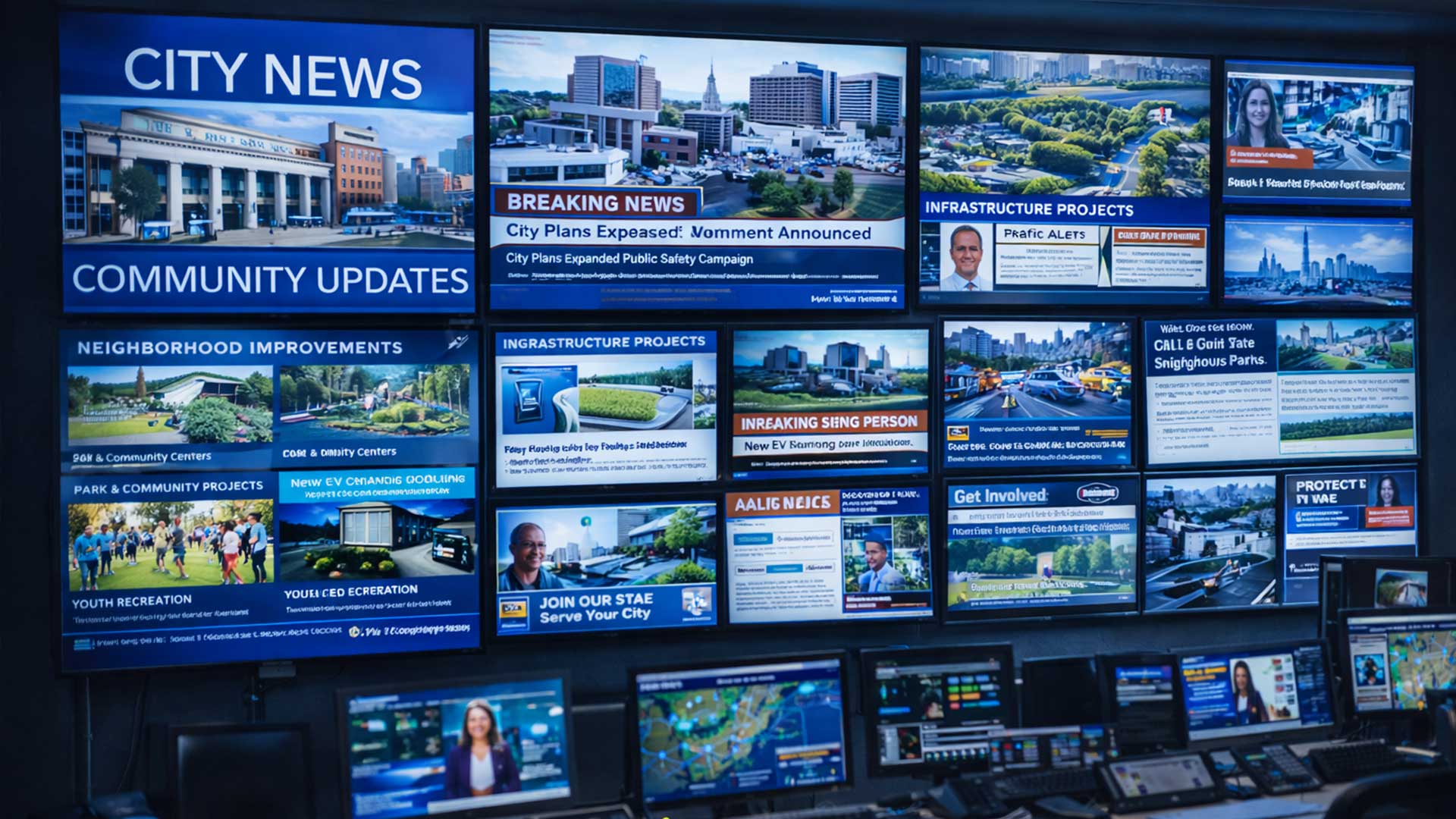
To address this challenge, many cities are creating modern digital communication platforms that function similarly to news organizations.
These platforms allow governments to publish stories, videos, interviews, and multimedia content that explain policies, highlight community programs, and showcase the people working to improve their cities.
Unlike traditional government communications tools, these platforms are built around storytelling rather than announcements.
Instead of issuing static press releases, cities are now sharing:
-
neighborhood success stories
-
behind-the-scenes looks at public programs
-
profiles of community leaders and city employees
-
updates on major initiatives and infrastructure projects
-
explanations of policy decisions in plain language
This approach helps residents understand not just what government is doing, but why it matters to their daily lives.
From Press Releases to Digital Storytelling
Traditional government communication has often relied on formats designed decades ago.
Press releases, long reports, and departmental notices were created primarily for journalists rather than residents. In today’s digital environment, those formats are often difficult for the public to find, read, or understand.
Modern civic media platforms transform these updates into engaging stories that people actually want to read.
They combine text, video, images, and interactive elements to create content that feels familiar to residents who consume news on their phones, tablets, and laptops every day.
This shift reflects a broader understanding among city leaders: communication is now a core part of civic infrastructure.
Just as cities invest in roads, utilities, and public safety, they must also invest in how information flows between government and residents.
Atlanta’s Digital Newsroom Example
One example of this shift can be seen in Atlanta.
The city launched ATL.Direct, a digital newsroom designed to highlight important initiatives, community programs, and opportunities for residents to engage with local government.
Stories on the platform range from electric vehicle initiatives to youth recreation programs and public safety recruitment efforts.
By presenting these updates as accessible stories rather than traditional press releases, Atlanta created a platform where residents can regularly learn about what is happening across the city.
ATL.Direct illustrates how cities can modernize public communication while strengthening transparency and community engagement.
Technology Enabling the Civic Media Platform
Behind these new civic media platforms are technologies designed specifically for government storytelling.
Platforms like CivicStory, developed by Civic Direct, help municipalities launch digital newsrooms that combine editorial storytelling with government-grade accessibility and publishing workflows.
CivicStory provides cities with tools that support:
-
multimedia storytelling
-
cross-department collaboration
-
accessible publishing standards
-
structured editorial workflows
-
scalable infrastructure for growing content libraries
This type of platform enables governments to communicate with the public in ways that are both professional and approachable.
A New Era of Civic Communication
The rise of government media platforms reflects a broader transformation in how communities share information.
Cities are not trying to replace independent journalism. Investigative reporting and independent newsrooms remain essential for accountability and democracy.
However, as traditional local media shrinks, governments must ensure residents still have access to credible, timely information about their communities.
By embracing modern storytelling platforms and digital publishing tools, cities can create new channels for transparency, engagement, and public trust.
In many ways, the future of civic communication will depend on how effectively governments learn to inform the people they serve.
And increasingly, that means thinking not just like administrators — but like publishers.